Trigger points are painful spots in the muscles that limit movement. Interested in learning about their causes and treatments? This article explains the symptoms and effective remedies for trigger points, helping you find relief.
What Trigger Points Are and How They Affect Your Body?
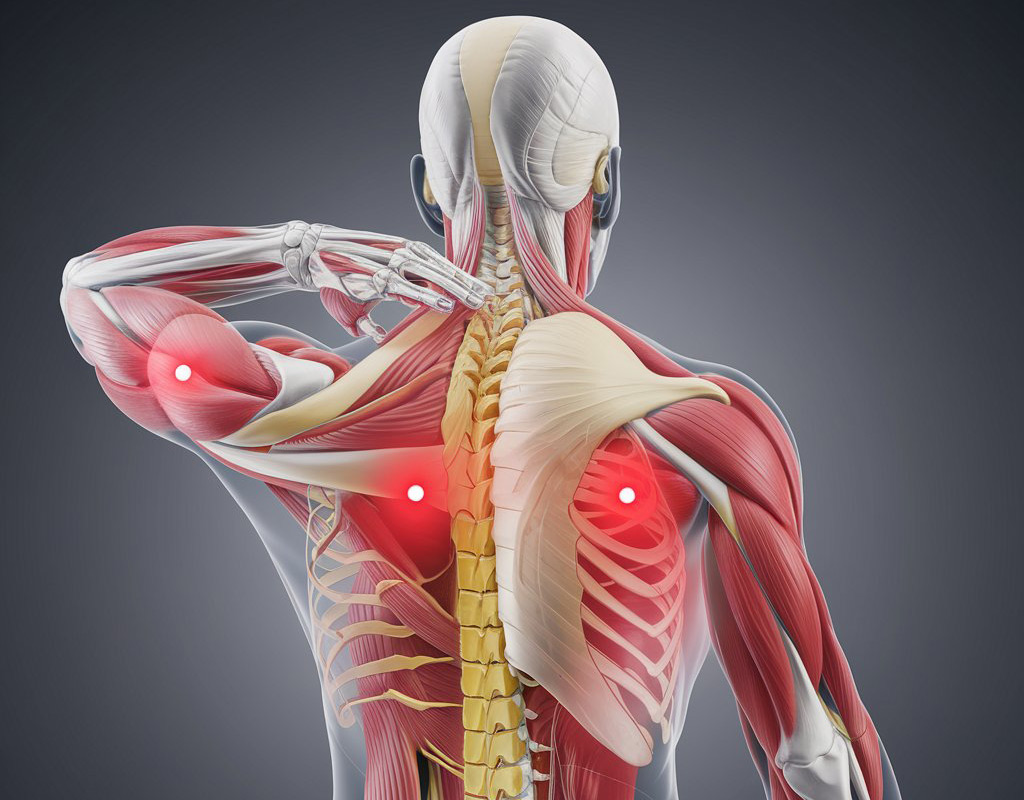
When you have muscle knots, also known as trigger points, you’ll feel pain and weakness in specific hyperirritable spots within your skeletal muscles. You might notice these areas as tight bands within your muscles that limit your range of motion and make even basic tasks difficult. Unlike generalized muscle cramps that affect an entire muscle, trigger points only affect a small segment of your muscle tissue.
These notorious knots cause persistent and intense pain that can disrupt daily activities. Once activated, they can interfere with normal movement and cause discomfort both at their location and in distant areas of the body (referred pain). Understanding trigger points and how they work is helpful when seeking solutions to this common issue.
Definition and Characteristics
According to Drs. Janet Travell and David Simons (1992), a trigger point is defined as “a highly irritable localized spot of exquisite tenderness in a nodule in a palpable taut band of (skeletal) muscle.” These hyperirritable spots are located in a tight strand of muscle fibers and can be identified as distinct, sensitive areas through palpation.
Trigger points that cause persistent and worsening pain can develop into a chronic condition known as myofascial pain syndrome, which contributes to both musculoskeletal and mechanical muscle pain.
Research has shown that a high prevalence of trigger points is associated with:
- myofascial pain
- psychological disorders
- somatic dysfunction
What are the Different Types of Trigger Points?

Trigger points can be categorized into several groups:
1. Active Trigger Points
Active trigger points are known for their ability to cause pain even when the affected muscle is not in motion. These specific points can produce intense, sharp discomfort directly at their location and refer pain to distant areas of the body.
2. Latent or Inactive Trigger Points
On the other hand, latent trigger points may not cause spontaneous pain, but they can limit range of motion and lead to muscle stiffness. These points are thought to be more common in people with a sedentary lifestyle. Pain at these points only appears when direct pressure is applied, making them less noticeable than active trigger points.
3. Central Trigger Points
These are the most clearly defined trigger points when active. Also known as primary trigger points, they are located in the center of the muscle belly, where the motor endplate (MEP) enters the muscle.
What Causes Trigger Points?
Typically, trigger points develop as a result of:
- Vitamin deficiencies: B1, B6, B12, C, folic acid, and iron
- Chronic stress condition
- Stress and anxiety
- Sleep problems
- Muscle injury
- Poor posture
What Are the Symptoms of Trigger Points?
Trigger points can produce a wide variety of symptoms, most notably sharp and chronic pain felt either directly at the trigger point or as referred pain in other areas of the body.
For example, a trigger point located in the shoulder might cause discomfort that radiates down the arm or into the neck. Because of overlapping pain patterns, trigger points are often mistaken for other conditions such as pinched nerves or migraines.
Muscle tension and decreased range of motion are also common indicators associated with trigger points. Applying pressure to these areas can cause not only intense localized pain but also an involuntary “jump sign,” which may trigger a reaction to the stimulation. This phenomenon often appears along with a local twitch response—an observable or palpable contraction within the muscle.
Maintaining Factors of Trigger Points
The presence of one or more of the following factors presents challenges in the long-term prevention and treatment of trigger points:
- Aging
- Obesity
- Anorexia
- Stress patterns
- Chronicity of the trigger point
- Psychological factors (anxiety, depression, anger)
- Posture
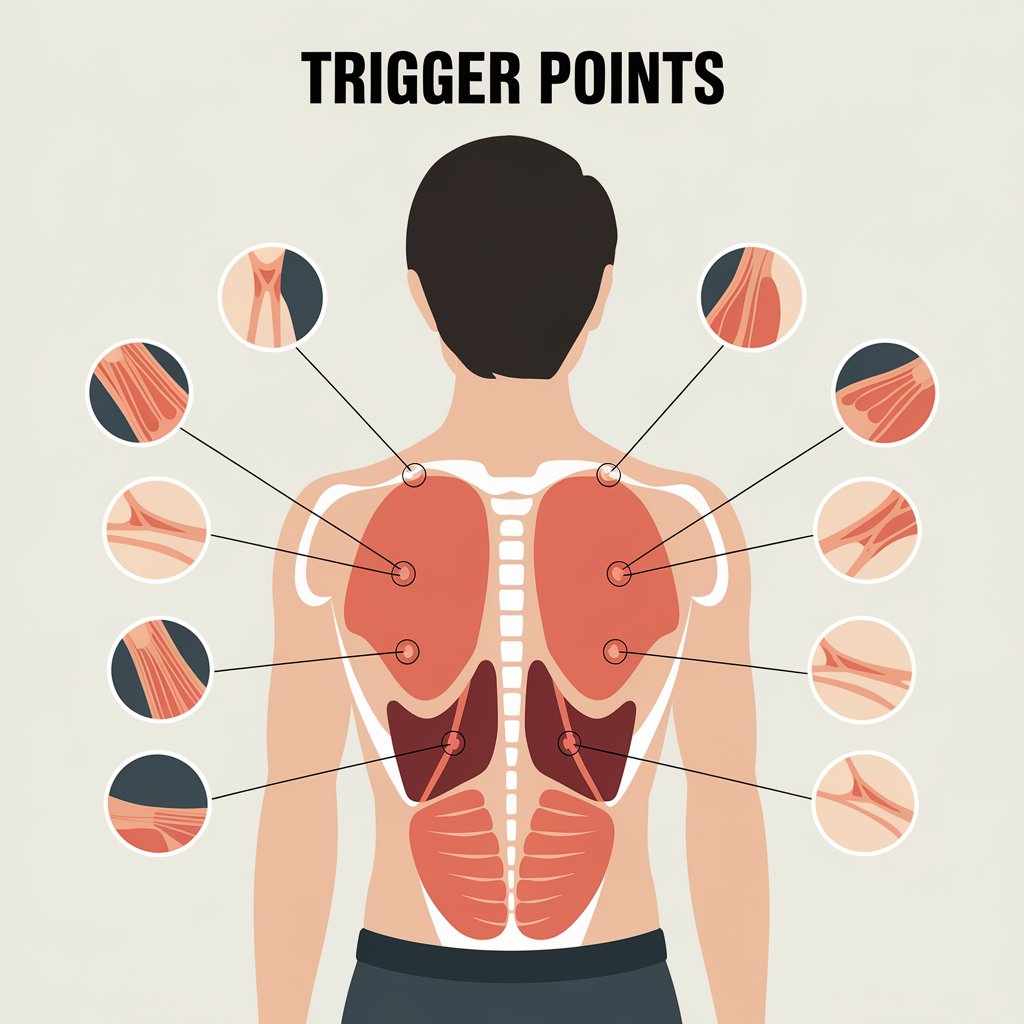
Where Are Trigger Points Commonly Located?
1. Neck and Shoulders
You may frequently develop trigger points in the neck and shoulder area, especially in the trapezius muscle. These muscle knots can cause tension headaches and significant discomfort in the neck and shoulders. Repetitive movements or poor posture make it more likely for these trigger points to form.
Massage therapy and similar techniques can effectively reduce muscle tension and provide relief by working on the affected areas.
2. Lower Back
You may experience trigger points in the lower back, specifically in the quadratus lumborum and iliopsoas muscles; these muscles are common sources of chronic pain and musculoskeletal issues. These areas can cause intense discomfort, potentially making it difficult to carry out daily tasks.
Trigger point pain in the lower back can radiate to various parts of the body. Therefore, specialized interventions like physical therapy and musculoskeletal rehabilitation are essential to address referred pain.
3. Other Common Areas
You may develop trigger points in the gluteal region that cause pain radiating down the legs, often resembling sciatic symptoms. Similarly, trigger points in the temporomandibular joint can lead to jaw discomfort and headaches, which may be mistakenly attributed to dental problems. Recognizing and treating these areas early is crucial to prevent chronic pain conditions.
The presence of trigger points in both the gluteal region and the temporomandibular joint can significantly hinder mobility and reduce quality of life due to the intense pain experienced in these areas.
Trigger Point Prevention Strategies
1. Stretching
Proper stretching helps prevent muscle imbalances that can lead to the formation of trigger points. Follow these simple steps to stretch effectively and maintain muscle health.
- Warm up first
- Stretch slowly and gently
- Maintain good posture
- Don’t bounce
- Breathe deeply
- Stay consistent
2. Strengthening
Not using your muscles regularly or remaining inactive for long periods leads to muscle weakness. When muscles are weak, they struggle to support the body and perform daily activities, making them more prone to strains or injuries. This muscle weakness often contributes to the development of trigger points.
Choose to incorporate strengthening exercises and combine strength training, flexibility work, and recovery techniques. Prioritize stability and balance, include a yoga-based stretching routine, and enhance recovery strategies to support overall muscle health.
3. Other Strategies to Prevent Trigger Point Formation
- Stay hydrated
- Consistent quality sleep
- Meditation
- Deep breathing exercises
- Diet (anti-inflammatory nutrients)
What Are the Treatment Options for Trigger Points?

1. Massage Therapy
Trigger points in the body can be effectively managed through various therapeutic approaches. During therapeutic massage sessions, you may feel some initial discomfort, but many patients experience significant improvement in both pain and muscle function by the next day.
Recommended Massage Types for Trigger Points
- Hot stone massage
- Deep tissue massage
- Swedish massage
- Sports massage
- Foam rolling
2. Spray and Stretch
El método de pulverización y estiramiento destaca como una modalidad de tratamiento eficaz. Implica una sensación refrescante al aplicar el aerosol sobre los músculos afectados, seguida de un estiramiento suave. Muchos pacientes encuentran esta combinación particularmente eficaz para ayudar a relajar los músculos y reducir el dolor.
Junto con su fisioterapeuta, descubrirá qué métodos de tratamiento se adaptan mejor a sus necesidades específicas. Dado que cada paciente responde de forma diferente al tratamiento, su fisioterapeuta le ayudará a personalizar el enfoque que le brinde el mayor alivio.
3. Trigger Point Injections
Trigger point injections are an effective method for treating them. The main goal is to deactivate the trigger point and relieve pain. A healthcare professional injects a small amount of local anesthetic directly into the affected area during treatment. This can help relax the affected muscle and reduce discomfort. Incorporating trigger point therapy can enhance this type of treatment.
4. Home Remedies
Effective pain management for trigger points can be done with home remedies such as the following:
- Take warm baths to reduce stress and muscle tension.
- Apply heat to the muscles to relieve chronic pain.
- Use self-massage techniques with various tools and incorporate stretching into your routine to reduce stiffness.
Frequently Asked Questions
What causes the development of trigger points?
Trigger points can develop due to various factors such as muscle overuse, poor posture, stress, vitamin deficiencies (B1, B6, B12, C, folic acid, and iron), sleep disorders, and injuries. Chronic tension and prolonged inactivity can also contribute to their formation.
How do I know if I have trigger points?
You may have trigger points if you experience persistent muscle pain, tight knots, tenderness, and reduced range of motion. Referred pain, where discomfort spreads to distant areas, and a local twitch response when applying pressure on the muscle are also common indicators.
What are the best treatments for trigger points?
Effective treatments include massage therapy (such as deep tissue and hot stone massage), foam rolling, physical therapy, stretching, strengthening exercises, trigger point injections, and home remedies like heat therapy and self-massage.
Can trigger points be prevented?
Yes, trigger points can be prevented through regular stretching, strengthening exercises, proper hydration, quality sleep, stress management techniques such as meditation and deep breathing, and maintaining good posture during daily activities.